
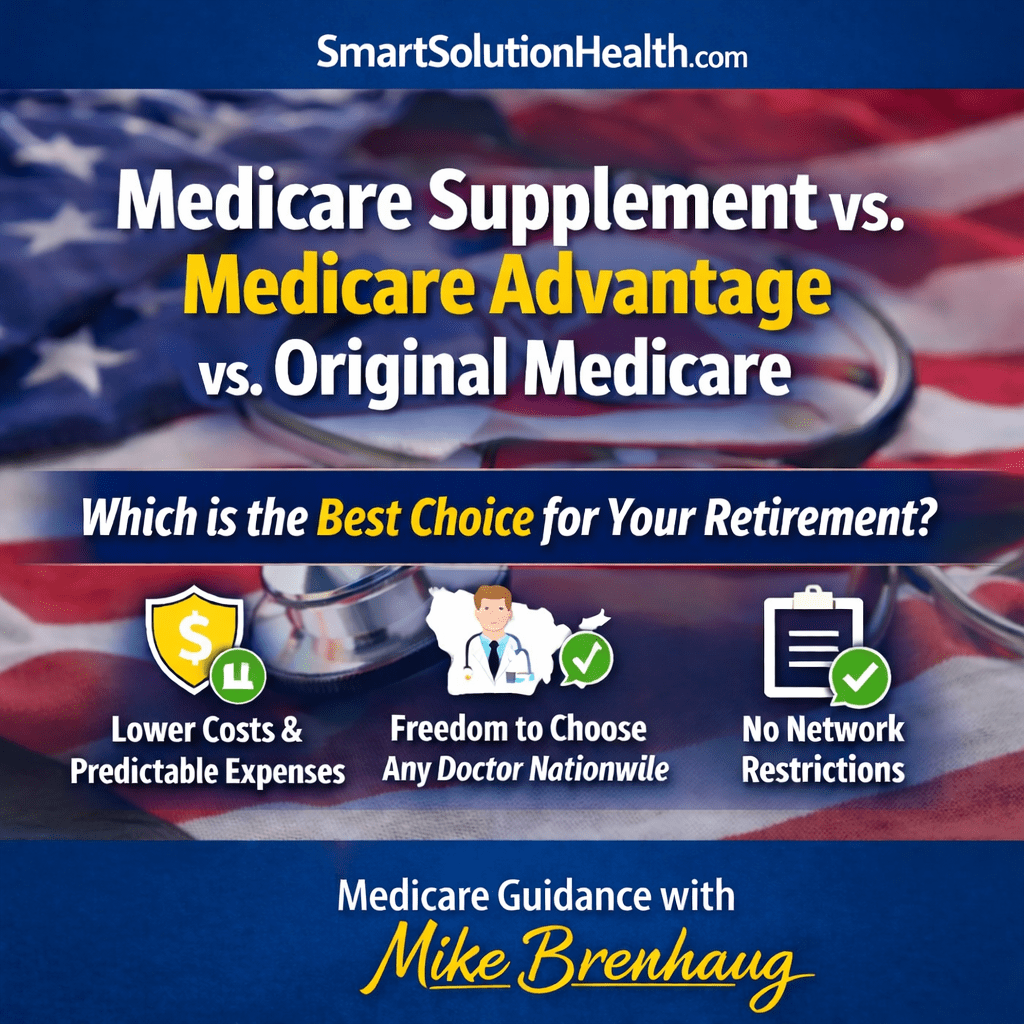
Which Is the Smartest Long-Term Choice for Your Retirement?
Choosing the right Medicare coverage is one of the most important financial decisions you’ll make in retirement.
When you become eligible for Medicare, you generally have three paths:
Original Medicare (Part A & Part B)
Medicare Advantage (Part C)
Medicare Supplement (Medigap) + Part D
While each option has its place, many retirees who value flexibility, predictable costs, and long-term protection find that Medicare Supplement plans provide the strongest foundation for retirement healthcare planning.
Let’s break this down clearly and strategically.
Step 1: Understanding the Three Medicare Paths:
Original Medicare (Part A & Part B)
Original Medicare is administered by the federal government.
Part A covers hospital stays.
Part B covers doctors, outpatient care, labs, and medical services.
You can see any provider nationwide that accepts Medicare.
There is no out-of-pocket maximum.
This last point is critical.
Original Medicare pays:
80% of approved medical costs under Part B.
You pay 20% — with no cap.
That means major procedures, cancer treatment, or extended hospital stays could expose you to unlimited financial risk.
Medicare Advantage (Part C)
Medicare Advantage plans are offered by private insurance companies approved by Medicare.
They often advertise:
Low or $0 premiums
Dental, vision, and hearing benefits
Prescription drug coverage included
However, they operate as managed care plans (HMO or PPO models).
This typically means:
Provider networks
Referrals for specialists
Prior authorizations for procedures
Annual benefit changes
Cost-sharing throughout the year
While they include an annual out-of-pocket maximum, members frequently pay copays and coinsurance as they use services.
Medicare Supplement (Medigap)
Medicare Supplement plans work alongside Original Medicare.
They are designed to:
Cover deductibles
Cover coinsurance
Reduce or eliminate out-of-pocket surprises
The most popular option nationwide is Plan G, which typically covers all Medicare-approved expenses after you meet the small annual Part B deductible.
This creates:
Predictable costs
Minimal surprise billing
Nationwide provider access
Why Many Retirees Prefer Medicare Supplement Plans
 Freedom to Choose Any Doctor Nationwide
With Medicare Supplement:
No networks.
No referrals.
No geographic restrictions.
See any provider in the U.S. who accepts Medicare.
This is especially valuable if you:
Travel frequently.
Split time between states.
Want access to top specialists or teaching hospitals.
Move during retirement.
Medicare Advantage plans often limit you to local networks and may restrict out-of-area care.
Freedom matters — especially in retirement.
 Predictable Out-of-Pocket Costs
Original Medicare alone leaves you exposed to unlimited 20% coinsurance.
Medicare Advantage has an annual maximum but requires copays and coinsurance throughout the year.
Medicare Supplement plans, particularly Plan G:
Cover nearly all Medicare-approved expenses.
After the Part B deductible, many services are covered at 100%.
Provide financial clarity and consistency.
For retirees living on fixed income, predictability is powerful.
 No Prior Authorizations for Most Services
One of the biggest frustrations people experience with Medicare Advantage plans is prior authorization.
That means:
The insurance company must approve certain procedures.
Delays can occur.
Some treatments may require additional steps.
With Medicare Supplement:
If Medicare approves it, your supplement pays its share.
No insurance gatekeeping.
Your doctor makes the medical decisions.
That peace of mind is difficult to quantify — but incredibly valuable.
 Long-Term Strategy Matters
Here’s something many people don’t realize:
Your initial Medicare enrollment window (around age 65) is typically the best time to enroll in a Medicare Supplement plan without medical underwriting.
If you choose Medicare Advantage and later develop health conditions, switching to a Supplement plan may require medical approval in many states.
That means:
You could be declined.
You could face higher premiums.
You could lose flexibility.
For many retirees, enrolling in a Supplement plan early protects future insurability.
 Ideal for Financially Stable Retirees
Medicare Supplement plans are often best suited for individuals who:
Have retirement savings.
Want access to the best doctors without restrictions.
Value long-term stability.
Prefer paying a higher predictable premium in exchange for lower medical uncertainty.
While Medicare Advantage may appeal due to lower upfront premiums, the long-term cost structure can be less predictable depending on health events.
When Medicare Advantage Might Be Appropriate
To provide a balanced view:
Medicare Advantage can be appropriate for:
Individuals on tight budgets.
Those comfortable with network limitations.
People who prefer bundled dental and vision coverage.
Individuals who rarely travel outside their service area.
The key is understanding the trade-offs.
Why Smart Planning at 65 Matters
Your Medicare decision affects:
Your retirement income.
Your healthcare access.
Your financial exposure.
Your long-term flexibility.
Choosing based solely on monthly premium can be short-sighted.
The real question is:
Do you want lower premiums today — or stronger long-term protection?
The SmartSolutionHealth.com Approach
At SmartSolutionHealth.com, we believe Medicare planning is not just enrollment — it’s strategy.
We help you evaluate:
Current health
Future risk exposure
Budget stability
Travel lifestyle
Underwriting considerations
Long-term flexibility
Our goal is simple:
Educate first.
Pressure never.
Protect your retirement with clarity and confidence.
Final Thoughts
For many retirees, Medicare Supplement plans provide:
Maximum doctor freedom
Predictable costs
Minimal claim friction
Long-term peace of mind
Medicare Advantage works for some.
Original Medicare alone leaves financial gaps.
But if you want stability, flexibility, and protection for the next 20–30 years of retirement, Medicare Supplement plans often rise to the top.
Ready to Compare Your Options?
If you’re:
Turning 65,
Leaving employer coverage,
Currently enrolled in Medicare Advantage and reviewing options,
Or simply unsure which path is best,
We’re here to help.
Visit SmartSolutionHealth.com
Schedule a consultation with Mike Brenhaug
Get personalized Medicare guidance tailored to your retirement goals
Your Medicare decision is too important to guess.
Make it strategic.